Thanks Mom

Thanks Mom

A sly smile upon her face, my mom leads me into the crowded recruiting station.

How lucky am I?

Just yesterday we were debating this, and today she’s going through with it.

Surrounded by men in smart uniforms, I look around at all the hustle and bustle.

“Why do you want to join the flying corps Grace?” she had asked me yesterday.

“I like the uniforms.”

“Oh, you ought to have a better excuse than that!”

Yet, here we are!

She looks around before tugging the crisp brown uniform of a man hurrying by.

“Where is the women’s flying corps recruiter?” she demands from this clearly rushed cute soldier with polished buttons, a sharp collar, and pressed tunic.

He stops in his tracks, looks at her, then at me, and shrugs his shoulders before blurting out, “I’ve no idea Ma’am, I am lost here myself.”

“Well dear, let’s find out where we’re going together.”

The hurried fresh-faced soldier in smart attire pauses, looks around, then nervously runs off in the original direction he was heading.

Poor chap, going off to war but unable to face a woman.

Turning to mom, I smile and giggle.

She squeezes my hand, “That won’t help dear.”

I resolve my face before turning left where I’m delighted to spot a sign reading WOMEN VOLUNTEERS at the end of the hall.

“This way mom!” I exclaim while dragging her hand behind me as I head toward the sign.

This is it, we’ve found it!

We enter a small, practically empty room where another uniformed man sits behind a desk strewn with a small stack of forms. He looks up from a book as we disturb his peace.

“Which of you is volunteering today?” he says in a kind voice.

“I am,” I call out in reply as his eyes divert from mom toward me, taking their time as they work up my skirt-covered legs.

Like what you see?

“How old are you, Miss?”

“I’m 17, Sir,” I reply, knowing full well that is the minimum age to volunteer with parental consent.

Do you believe me?

His eye-based assessment of me continues, pausing at my chest before rising to my face.

He turns to mom. “Are you this girl’s mother?” he asks.

“Yes, Sir,” she offers back in her most graceful voice.

“Ma’am, can you vouch for this girl’s age?”

“Indeed Sir, she is 17, has been for about one month now.”

He turns away from mom to look me over again. His eyes halt at my face, then my chest again, before finally returning to my face.

I know I’m not large, but I’m mature.

“Alright,” he says with a sigh. “Please fill this out and bring it back to me.”

I look down at the form he hands me. It’s for the Women’s Land Army.

I don’t want to work the land; I want to fly!

“Sir, is there a form for the Women’s Royal Air Force? That is my preference.”

Looking down through his pile, he pulls a form out from the bottom.

“Last one, I’m afraid.”

“I’ll take it!” I blurt out, potentially exposing my over eagerness to volunteer.

Form in hand, he holds it back as his eyes give me another once over, again stopping at my chest.

“When did you say your birthday was?” he asks.

Is he on to me?

A bead of sweat slowly makes it way down my right temple.

“A little less than one month ago, Sir,” I reply, attempting to hide my nerves.

Another moment’s pause, then he hands me the form. “Please fill it out in the hall and hand it back to me.”

Yes! It worked!

Mom pulls me into the hall as I look over the form. She drags me away from the door so that we are against the far wall.

“Grace, the right date will be 1901.”

“Yes, mom, thank you.”

I’m going to get to wear the uniform!

*****


British Women Volunteers

http://www.treasurebunker.com/forums/index.php?showtopic=1788


Grace Hallen’s mother accompanied her to the recruiting station on May 10, 1918 so Grace could join the Women’s Royal Air Force (WRAF). The minimum age for volunteers with parents’ permission was 17. Grace, a mature 15-year-old, was enthusiastic about being around aircraft and loved the uniforms. Since birth certificates were not used for recruiting, and her mother was willing to lie for her, Grace was allowed into the WRAF.

She served through the remainder of the war, alongside over 32,000 other women in the British military air arm of World War I. This force was dissolved in 1920, and reconstituted in 1939 as the Women’s Auxiliary Air Force for World War II. It was renamed the WRAF again in 1949 and fully integrated with the Royal Air Force in 1994.

 

Discovery

Featuring the amazing Órla Mc Govern.

Discovery

A brisk wind pulls at my great coat, pushing up through the open bottom to chill my panted legs. Residue of last night’s storm cannot deter me from thrashing out near the rocks.

What nerve, to ask for my hand!

I weave my way between the jutting rocks of the shoreline. Soft sand sinks beneath my quick-paced feet.

There is a war on. I cannot marry a man who will soon be sent away.

Dark moss-covered rocks, wet with the ocean mist and crashing waves, feel cool to my hands as I climb up a small slope from the shoreline.

If Braden had not volunteered to go, then maybe. But how can I give my heart to a man who will fight in this mistake of humanity?

Rising atop the mass of broken rocks I look down the shoreline where the fog meets the ground and sea in a single point of outward triangles.

Air, land, and sea stab all at once against my heart. Which direction do I go from here?

A dark object with a twisted limb juts out from behind one of the rocks just visible before the morning mist swallows everything. It floats and bumps, coming above the rock in rhythm with the tidal waves before disappearing behind the rock again as the tide goes out.

What could that be?

Slowly descending the damp rocks, I make my way toward the object. I keep my eyes fixed on the rocks at my feet so as not to slip on the wet moss. A gale blows across the upper rocks, a last gasp of last night’s tumult. Howls and screams of powerful wind rushing past jagged wet rocks remind me of the tales of witches and monsters.

Can’t he stay out of the war? Nothing good can come of it.

Making my way toward the object, I can’t quite make out what it is. As I approach, I start to see what looks like a bloated dark bobbing thing the size of a large seal.

It must be dead since it’s only moving with the current of the waves.

The twisted limb comes into view above the rock. Clenched fingers in the shape of a fist appear at the end of the limb.

It’s a man!

Rushing over, I slip on a small rock, falling to the soft sand so my knees, coat, and hands get covered. I look back at the rock upon which I slipped, but it’s no rock. Tufts of hair stick out from an almost completely buried man’s head.

Two dead men!

Without thinking, my hands quickly start digging around the head, exposing a soft, gentle, still, bloated, and rotting face.

He must have been here for a while.

I keep digging. A whole head comes into view.

Who are these men?

What are they doing here?

A scream tears at my ears.

This war takes men I don’t even know, kills them, and brings them to me!

I pause; bringing my sand-covered hands toward my face. Staring at them, my body collapses under its own weight.

I cannot marry any man in THIS world.

A hand touches my right shoulder. Screaming out, I turn to see Braden standing, in shock, behind me. My arms drape around his broad shoulders as he squeezes me tight against his warm body.

His warm body. God, his warm body feels good. Please keep him warm!

My tears fall on his shoulder as he pulls me away from the bloated cold bodies on the beach. I don’t look back.

*****


HMS Viknor

http://dawlishchronicles.com/the-loss-of-hms-viknor-13th-january-1915/


From late January 1915 through mid-year, bodies began washing up along the shores of Donegal, North Antrim, Raghery (Northern Ireland) and the Scottish Islands. For a long time, they could not be identified. People from coastal towns simply kept finding more bodies every few days until one was discovered who still had ID tags. His name was Private J. Griffin. Research revealed Private Griffin was from the HMS Viknor, an armed merchant cruiser that disappeared January 13, off the coast of Ireland.

No one knows for sure what happened to the Viknor, but it is supposed that after capturing the German spy, Baron H A Wedell, the ship struck a German mine in a storm. All 291 men aboard, including the German spy, disappeared until many of them washed ashore over the ensuing months. Their remains are now scattered in cemeteries across Northern Ireland and Scotland.

Private Griffin, whose ID tags led to the realization of the ship’s loss, is buried with four unidentified companions at Bonamargie Friary, in a small corner of North Antrim Northern Ireland. Bally castle erected a Celtic cross memorial with an anchor, harp, and shamrock on it. The Viknor’s wreck was found by the Irish survey vessel Celtic Explorer in 2006 but the reason for her loss could still not be identified with absolute certainty. A small flag was placed upon the wreck to commemorate the loss of life.

Plummet

WHAT THE HELL WAS THAT? I scream as I’m thrown face down on the floor toward the rear of the fort.

 Just a moment ago I was crouching on the adapted bike seat which shoves itself far higher into a man’s back-end than any object really should go.

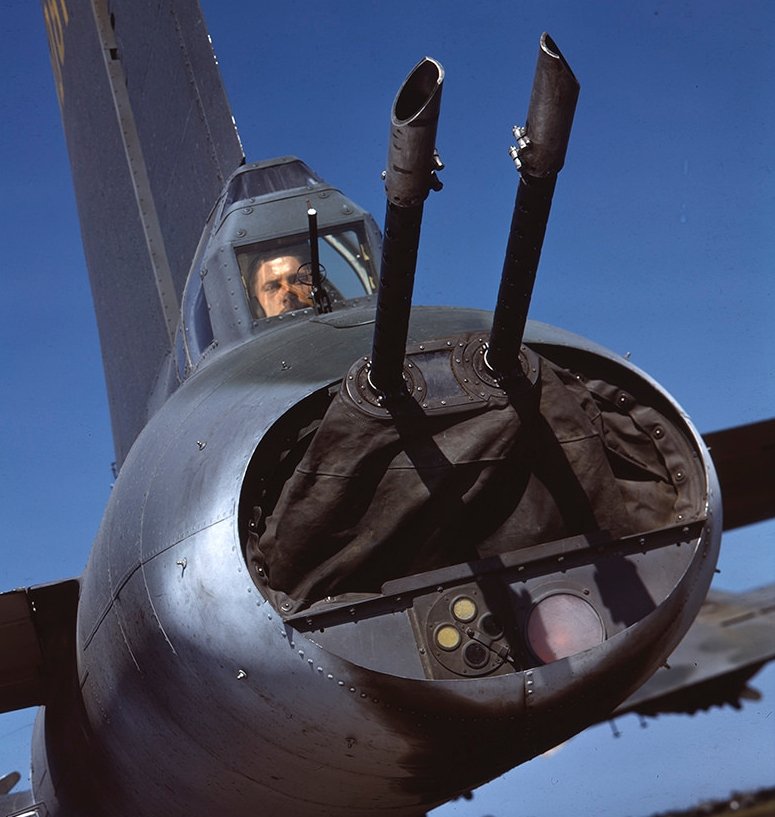
 I was scanning the densely foggy sky for aircraft from the cramped tail-gunner’s compartment of Skippy, my flying fortress.

 Watching the planes to our right and left, I was in a kneeling position, looking out over my guns.

 . . .

 We’re spiraling and falling.

 Flashes of blue, green and brown shoot through the tail window.

 The plane is spinning fast!

 Whatever happened threw me flat on my face. 

 Twisting to the right in a tight circle, the fortress spin broke the ammo trunk loose, so it’s now pinning me to the left wall of the compartment.

 I need to grab my parachute.

 I can’t move.

 How will I get to my chute?

 Impossible to move, my body is pinned flat against the wall.

 I must get to my chute!

 Straining every muscle, I try to shove or lift the ammo trunk with all my force.

 Nothing, I’m not moving.

 I try again, shoving with all my might against the plane’s ribbed interior.

 Nothing.

 I have to keep trying!

 Using every ounce of strength within, my whole body shoves against the wall and the ammo trunk; legs, arms, back, even the back of my head, but I can’t move it.

 I can’t move.

 I can’t just stay here while this plane crashes.

 . . .

 I can’t move and I can’t stay.

 . . .

 I have to move.

 With what’s left of my energy, I compel myself off the wall, pushing every last sinew until the heat of the pain forces me to stop.

 I can’t.

 I can’t move.

 I can’t get out.

 I can’t stop this.

 . . .

 Is this it?

 Falling to the ground in a plummeting plane is how I die.

 This is how I die.

 THIS IS HOW I DIE! I yell, girding myself with the vocalization of this realization.

 In another few minutes I’ll be dead.

 . . .

 Time is slowing down.

 Looking up through the tail window I can see only fog above.

 There is no sense of place.

 No here, nor there.

 Do not be anxious about anything.

 In every situation, by prayer and petition, with thanksgiving, present your requests to G-d.

 The ribs of the plane dig into my body as I’m forced ever more against its hard metal walls.

 “Have I not commanded you? Be strong and courageous. Do not be afraid; do not be discouraged, for the Lord your G-d will be with you wherever you go.”

 Images begin streaking across my mind.

 My mom’s face.

 My dad reaching out his hand to me as I prepared to board the train when I left for basic training.

 The softness of Emily’s lips when we last held each other.

 “Even though I walk through the darkest valley, I will fear no evil, for you are with me; your rod and your staff, they comfort me.”

 What have I done with this life?

 I could have given the toy car back to Jack.

 . . .

 Why did I not ask Emily to marry me?

 . . .

 What difference have I made?

 . . .

 “Be strong and courageous. Do not be afraid or terrified because of them, for the Lord your G-d goes with you; he will never leave you nor forsake you.”

 . . .

 What is this all for?

 . . .

 I’m not getting back to Kentucky after all, am I?

 . . .

 Why is this taking so long?

 If I’m going to die, why does it have to take so long?

 Get it over with!

 GET IT OVER WITH ALREADY!

 This is not ok.

 Come on!

 HURRY UP, DAMN IT!

 . . .

 “So do not fear, for I am with you; do not be dismayed, for I am your G-d. I will strengthen you and help you; I will uphold you with my righteous right hand.”

 . . .

 Time is fascinating.

 Most of it we don’t even notice.

 It goes by.

 Yet, at the end, it takes FOREVER!

 If it had taken this long through everyday life, I’d be dead by now.

 . . .

 WHAT IS TAKING SO LONG?

 . . .

 Going to college is no longer on the table.

 I would have liked college; the learning, the slower pace, the peace.

 This falling is peaceful.

 . . .

 Am I already dead?

 Is this what death feels like, this peace?

 The plane has been plummeting for so long, maybe I’m already dead.

 If this is death . . . I’m ok with it.

 . . .

 A raspy swishing sound breaks my thoughts.

 Looking out, no longer up, through the window I see the tops of trees float away as the fort scrapes along them.

 GROUND!

 . . .

 We’re gliding down!

 . . .

 WE’RE NOT FALLING, WE’RE GLIDING DOWN! I yell out.

 Just then, the plane comes to an abrupt and jerked halt.

 Thrown forward, I bump my chin against a side-rib of the plane too hard, but the ammo trunk is moved a bit in the crash.

 That’ll bruise.

 . . .

 We’re on the ground!

 WE’RE ON THE GROUND! I yell.

 I’M ALIVE!

 I’M ALIVE!

 I’M ALIVE!

 I’M ALIVE!

 . . .

 I’ve got to get out.

 The ship might be on fire.

 Shoving with what energy I have left, I’m able to nudge the ammo trunk a bit.

 It’s working now!

 Gathering all the strength in my arms and legs, I shove again.

 Again, a bit of a nudge.

 Keep at it.

 Use it all up, get out!

 UUURRRGGGG!!!!! I grunt as I shove again.

 More movement, it’s sliding now.

 AAAUUURRRHHHGGGHH!

 I GOT IT!

 I can rise!

 The ammo trunk is finally off of me.

 Raising my sore, and exhausted body off the wall of the downed fort, I dig my way out of the strewn shell casings, broken ventilation station, and other debris which had been tossed about as the plane spiraled down.

 My eyes scan the space looking toward the bulkhead door.

 Wow, the side of the ship is bashed in.

 Glad I wasn’t pinned against that wall.

 Turning the handle on the bulkhead door, I’m shocked by what I see.

 Or, don’t see:

 THERE’S NO PLANE!

 . . .

 The tail must have come apart from the rest of the plane, coming down by itself.

 What happened to the rest of the crew?

 As I remove my oxygen mask and headset, I scan the wreckage for another pair of shoes.

 Picking them up, I then exit the tail compartment of what’s left of Skippy.

 I gotta get away from here.


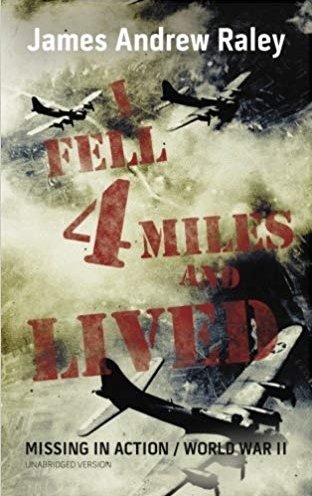
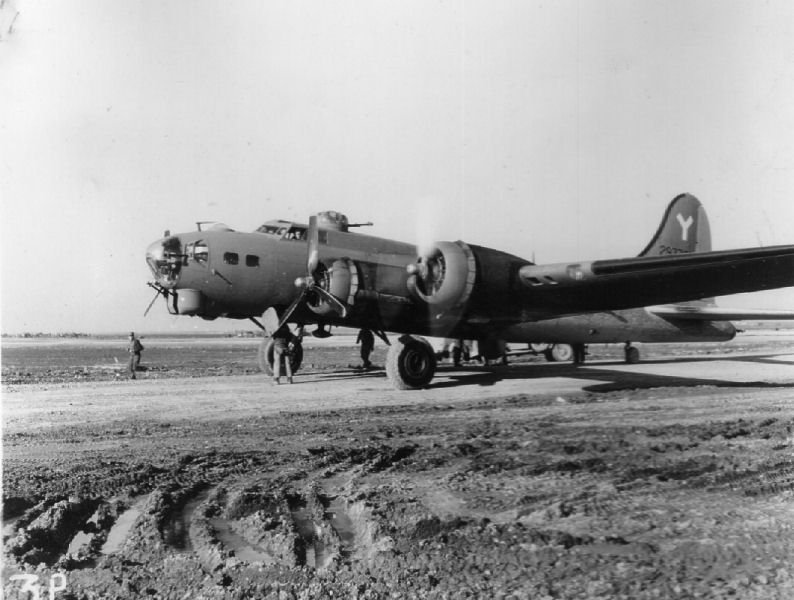
Sgt. James Radey was the tail gunner of “Skippy” a B-17 from the 301st Bomb Group, 253rd Bomb Squadron. He became the only survivor of his crew on January 11, 1944 when his squadron was in route over Greece. Visibility due to weather was barely past the wingtips of the aircraft, causing two bomb groups to collide head-on. Eight B-17s were destroyed, claiming 64 airmen’s lives. 17 men survived the crashes, Raley the only one to do so without using his parachute. Walking away from a four-mile fall in the broken tail section of a destroyed bomber, Raley suffered a cut to his chin and some bruises on his shoulder. Miraculously, the bomber’s ripped away tail section, with Raley inside, had just the right lift and weight distribution for it to “float like a leaf” and land relatively softly in a clump of pine trees. This was Raley’s 13th mission.


After the war, Raley visited the families of all of his lost crew, married, wrote an autobiography of his experience and retired as a Lieutenant Colonel in the Air Force after serving in Korea and Vietnam. He is buried in Arlington National Cemetery. From the day of the crash onward, he always considered 13 his lucky number.